Splash.
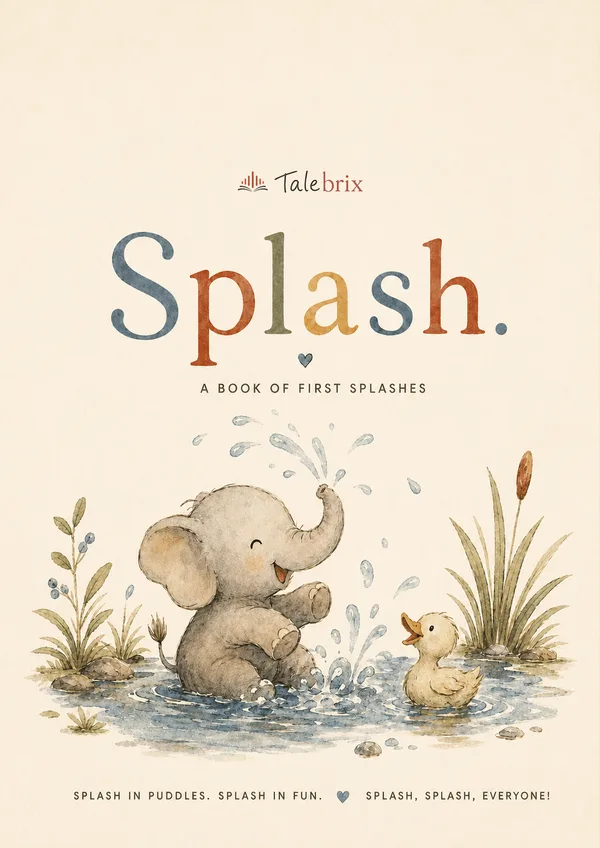
Ivy had one word and she said it over and over: splash. So the book is about an elephant who discovers puddles and a duck who shows her how. Six pages, one word each. Her parents have lost count of the readings somewhere past forty.
Your child talks. MirthTale writes the parts they leave open, prints the pages, and binds a picture book that comes out of the slot, ready for tonight's story, and tomorrow's, and the one after that.
Six minutes from an idea to a book on the shelf. No app opened, no screen read.
"A story about a fox who lost the moon." Said from under a blanket.
You hold it, they talk. Who, what goes wrong, and maybe how it ends.
Their title and name on the small display while the pages print. Then it goes dark.
Out of the slot, bound, warm. You read it aloud. They correct you twice.
Same book, same voice. The fortieth reading is where the words stick.
Every children's book on a shelf was written for a crowd. The reader who matters most to your child is the one sitting next to them tonight. MirthTale is designed around that audience of one, which changes almost everything about how a book gets made.
Who is in the story, what goes wrong, and how it ends are the child's decisions. There is no fixed script to follow and no menu to pick from.
We only write the parts your child leaves open. If they name a fox, a sister, and a detective cat, those are the characters. If they choose the ending, that ending is theirs.
The finished story is printed and bound, and you read it aloud. The device shows the cover for a moment, then goes dark. The screen is never the book.
One button. Your child says who is in the story and what happens, in their own words, with you beside them.
Using the chosen Story Pack world, it writes only what your child left open, keeping their characters, problems, and endings.
While the pages print, the small display shows the cover with your child's title and name. Then it goes dark.
Folded and sealed along the spine, sturdy enough for small hands, and yours to keep on the shelf.
Every one of these began as a sentence mumbled at bedtime. The child had the idea, MirthTale filled in what they left open, and by morning the book was on the shelf.
Ivy had one word and she said it over and over: splash. So the book is about an elephant who discovers puddles and a duck who shows her how. Six pages, one word each. Her parents have lost count of the readings somewhere past forty.
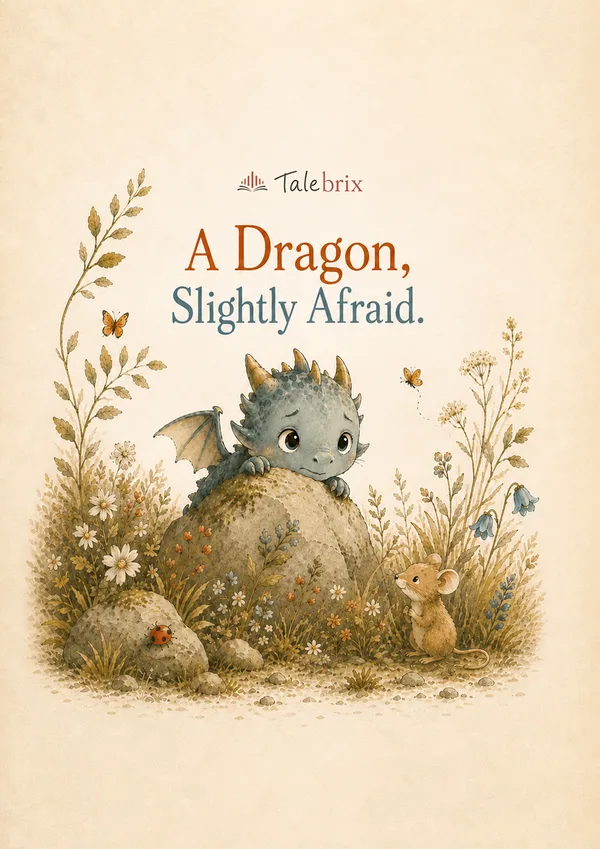
Theo wanted a dragon that was scared of a mouse. He did not say how it ended, so MirthTale wrote the part where the mouse shares its biscuit. Theo says that is the best page.
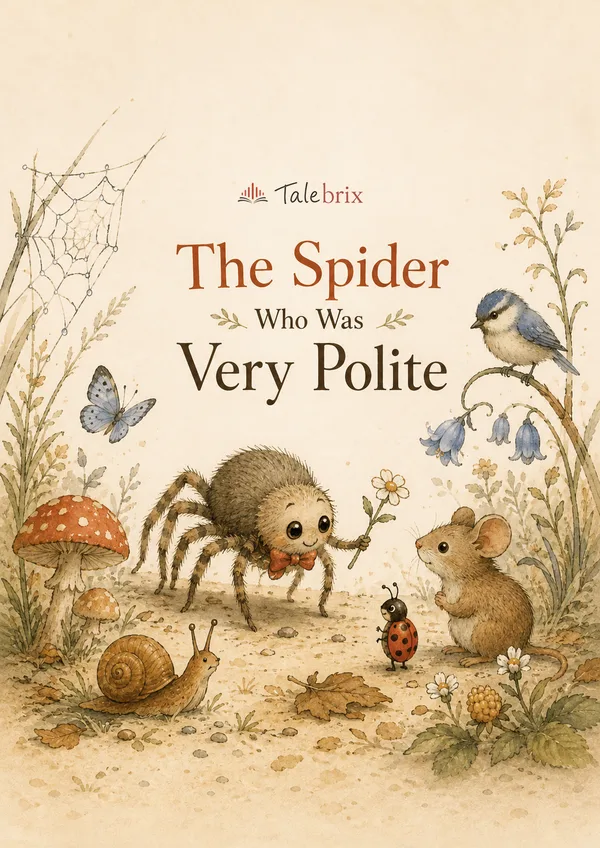
Amara's spider says please and thank you to everyone, and the problem is that nobody says it back. She chose the ending herself: the ladybird does, and then everyone does.
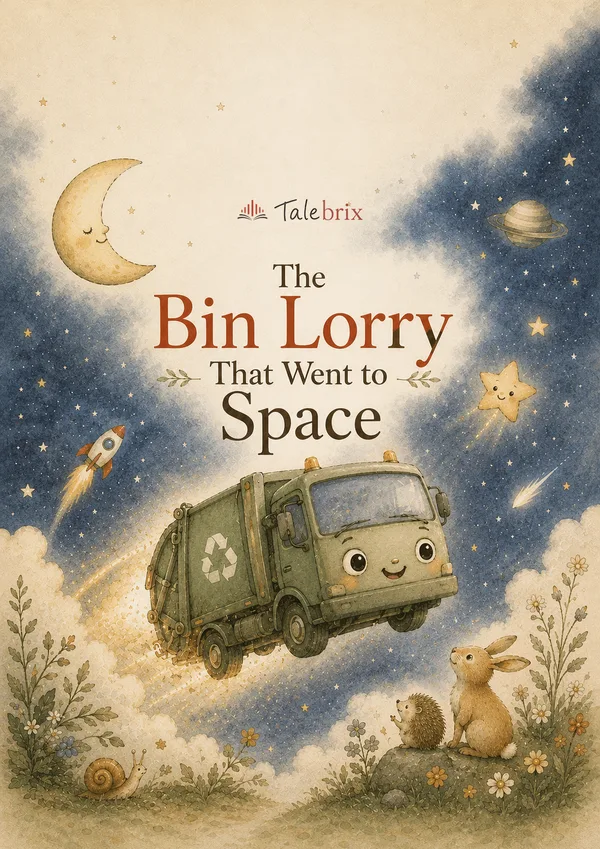
Leo's bin lorry gets tired of Tuesdays and drives straight up. What goes wrong: it forgets the way home. Leo's sister, age 3, has her own three-page version of the same trip.
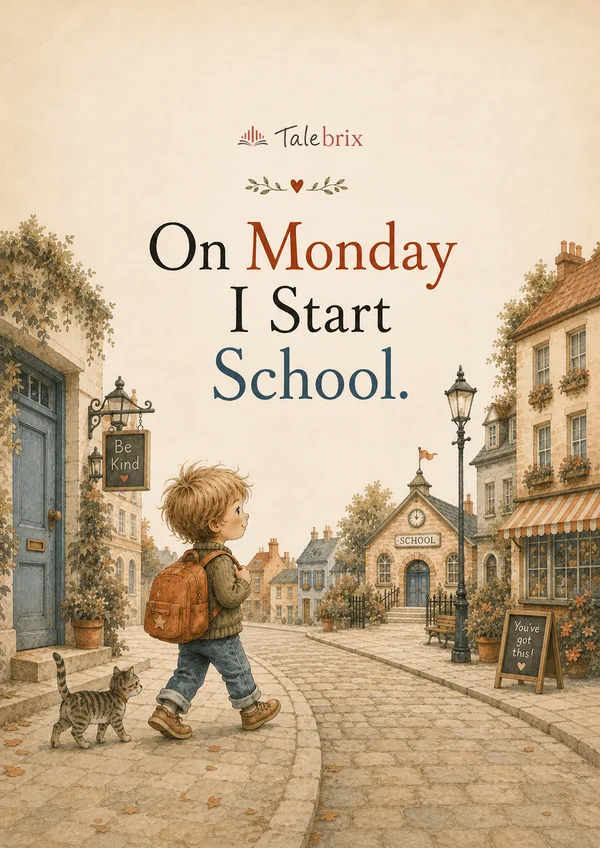
Noor made this the night before her first day. She is the hero, the cat came along uninvited, and the ending, in her words, was "I come home and it was fine."
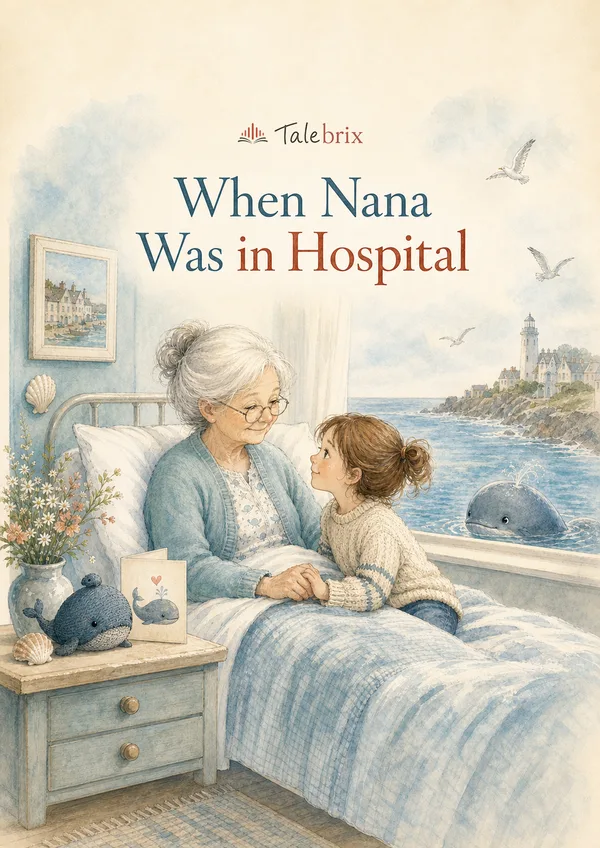
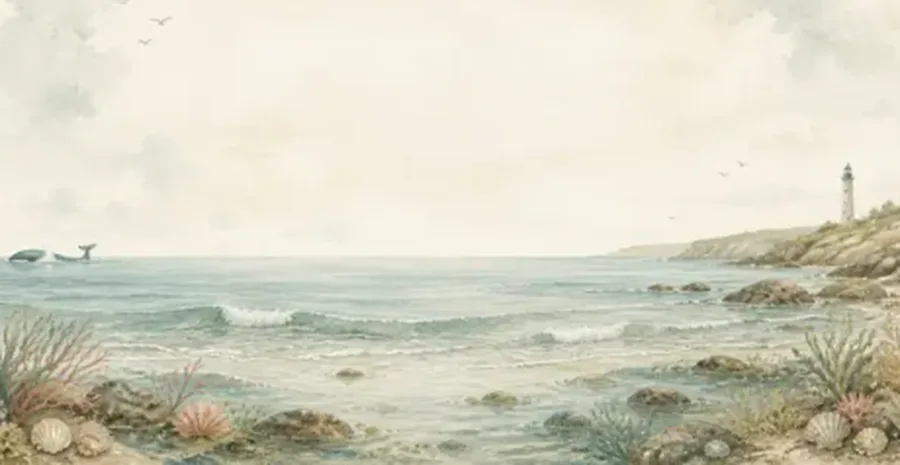
Milo told MirthTale who was in it, Nana and a whale outside the window, and what was wrong. He asked MirthTale to write the ending. It did, gently. Nana keeps the book on her bedside table.
We built MirthTale on a simple reading of the research: what helps children most is not clever content on a screen. It is a familiar book, a familiar voice, and the conversation that happens between the two.
When adults read alongside a child, paper books tend to produce more story-related conversation, better comprehension, and stronger word learning than the same stories on a screen.
Children hearing the same story again and again learn new vocabulary better than children hearing a different story each time. The book you read tonight matters more tomorrow.
The number of back-and-forth turns between an adult and a child predicts language growth more strongly than the sheer number of words a child hears.
The number of back-and-forth exchanges between an adult and a child predicts language growth more strongly than the sheer number of words a child hears. A book the child helped write is a book worth arguing about, and every argument is a turn.
What comes out of the slot is a real picture book: thick matte pages, a sealed spine that opens flat, a cover with their title and name. Built to be carried around the house, dropped, chewed, and re-read until the corners go soft.
MirthTale builds every book from whatever your child can already tell you. None of it is required, and all of it is kept.
A hero, a friend, a villain, someone from your kitchen table.
Every story needs a problem, and children are excellent at inventing them.
If your child can say it, the ending is theirs. If they can't or won't, MirthTale writes one gently. We never press a child for details.
The child's title goes on the cover, with the child's name, whatever the story turns into.
A Story Pack is a small physical insert that sets the world and its companion: the setting, the supporting cast, and one animal friend who turns up when needed. Your child still chooses who the hero is and what happens to them.
Drag the age and MirthTale rewrites the same idea into a book for a two-year-old, a five-year-old, or a nine-year-old. Siblings can share an adventure and each get a book that fits them.
A button to talk, a dial for age, a slot for the book, a bay for the Story Pack, and a small display that shows a cover and goes dark. There is nothing to pair, update, or unlock.
Listens only while held. A light shows when it is on.
Age 2 to 9. Move it and the next book is rewritten.
Where the finished book comes out, bound.
Physical Story Packs click in and out like cassettes.
Twelve families around Berlin have had a MirthTale on the nightstand since March. We asked them not to be polite.
She has one book she wants every night and it is about our neighbour's dog. I have read it maybe fifty times. She can say every word. I did not expect that from a box.
The screen going dark was the thing that sold me. He doesn't even look at it. He looks at the slot, waiting for the book, like it's toast.
My two argued about the ending for twenty minutes. The seven-year-old rewrote it the next night. That argument was the best conversation we had all week.
The rules we wrote before we built anything, and which have not changed since.
We are building the first run in Berlin. Join the list and we will write to you when yours is ready to ship, and never before.